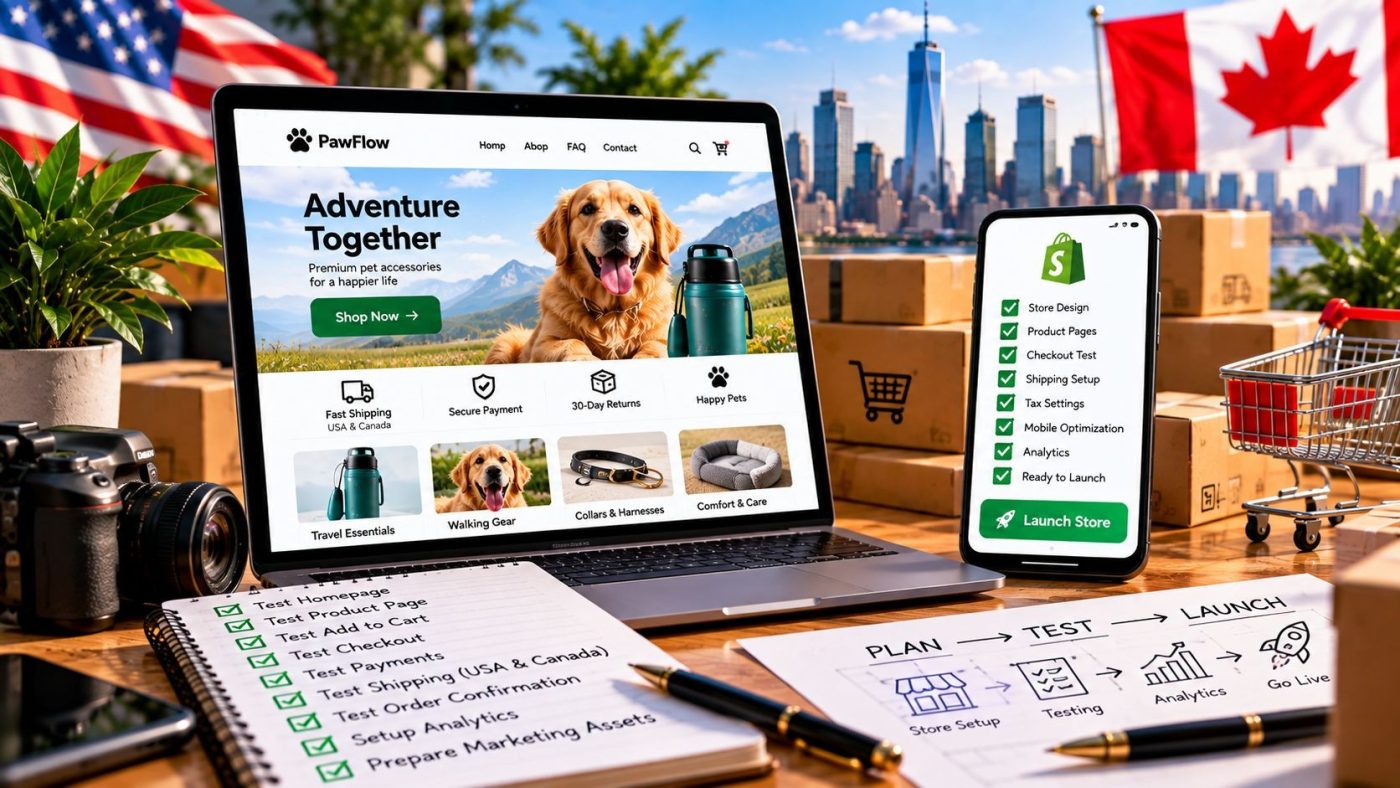
Before spending money on customer acquisition, make sure your store has been properly tested.
If you haven't completed the checkout, payment, shipping, analytics and tracking tests yet, go through [Article 4: How to Launch and Test Your Dropshipping Store in the USA and Canada] first.
Your store is live. Now find customers.
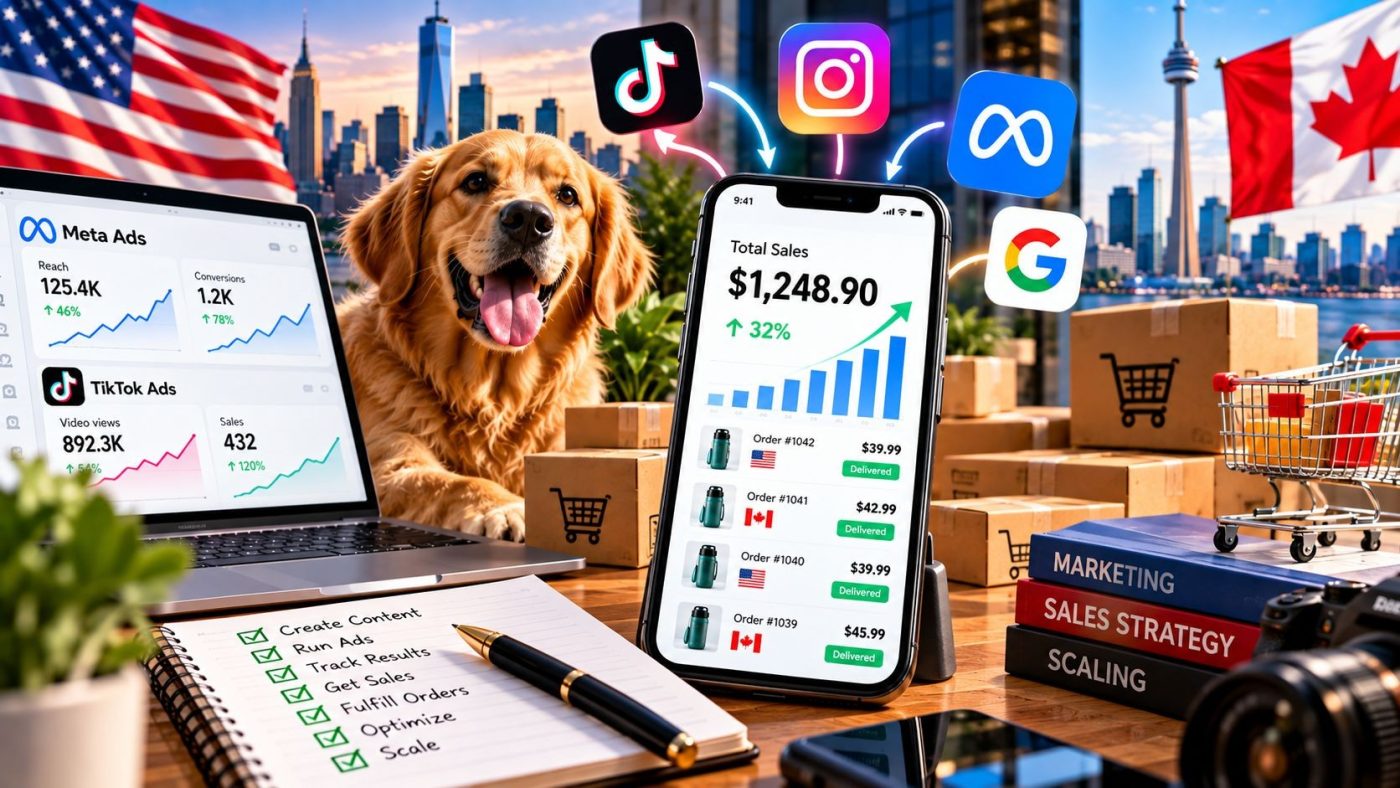
There are four major acquisition channels you can test:
TikTok
Meta Ads
Don't try to master everything simultaneously.
Start with one primary acquisition channel.
Option 1: Organic TikTok
Create short videos demonstrating the product.
For the dog product:
"If you own a dog, you need to see this."
Then demonstrate it.
Don't make every video:
"BUY NOW!"
Some videos should simply solve problems.
Option 2: Instagram Reels
Repurpose your best TikTok videos.
Post consistently.
Your account should become an information source around the niche, not simply a catalogue.
For example:
@PawFlow
Could publish:
dog travel tips;
dog walking tips;
outdoor dog content;
product demonstrations;
customer videos;
dog-owner problems.
Want Us to Handle the Technical Side?
You've now seen everything involved in setting up and launching a dropshipping business.
If you don't want to spend your time configuringShopify, domains, payments, shipping, taxes, analytics, tracking and the technical integrations, Bproo Dev can handle the technical setup for you.
Technical Setup — $250
You focus onproducts, marketing and customers.
We'll help you get the technical foundation configured and ready for your business.
Option 3: Meta Ads
Once you have several creative variations, you can begin paid testing.
The basic structure is:
Ad
↓
Product page
↓
Add to cart
↓
Checkout
↓
Purchase
Don't change everything at the same time.
If the product page gets traffic but nobody adds to cart, investigate the product page.
If people add to cart but don't purchase, investigate checkout, shipping, pricing and trust.
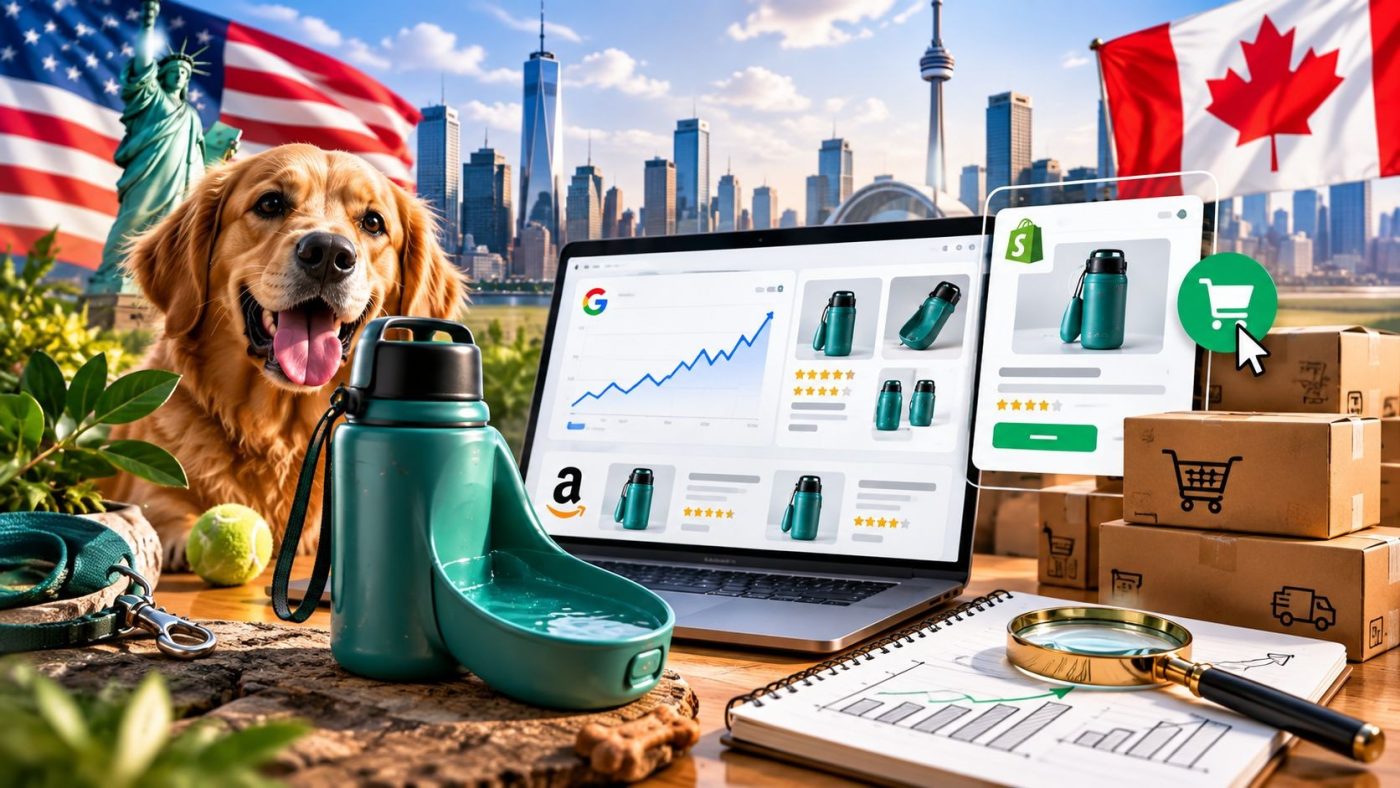
Option 4: Google Search
Google is particularly interesting when customers already know what they want.
For example:
portable dog water bottle
is a stronger purchase-intent search than:
cute dog products.
The first person is already looking for a solution.
You can also build SEO pages around searches such as:
best dog travel products;
best dog products for road trips;
dog travel essentials;
portable dog water bottle;
best products for walking dogs.
Build a simple sales dashboard
Create a spreadsheet like this:
Metric | Example |
|---|---|
Visitors | 1,000 |
Product views | 700 |
Add to carts | 70 |
Checkouts | 30 |
Purchases | 10 |
Revenue | $349.90 |
Product + shipping | $140 |
Advertising | $100 |
Other costs | $30 |
Remaining contribution | $79.90 |
The exact numbers will vary.
The important thing is to understand the complete funnel.
Your first objective isn't "go viral"
Your first objective is to answer:
Can I acquire a customer for less than the contribution margin available from the order?
Suppose:
Selling price = $39.99
Product + shipping:
$15
Payment/other variable costs:
$3
Available before advertising:
$21.99
If it costs you $40 to acquire a customer, the economics don't work.
If you can acquire that customer for $12, you have a very different business.
This is why product selection, supplier costs and advertising cannot be treated as separate subjects.
What happens after your first order?
You now have to fulfill it.
The normal dropshipping flow is:
Customer orders
↓
Shopify receives order
↓
Supplier receives order
↓
Supplier picks and packs
↓
Supplier ships
↓
Tracking is sent
↓
Customer receives product
Shopify describes this basic flow in the same way: customer order → store → supplier → fulfillment → direct shipment to customer.
After 10–20 orders
Now start analyzing:
refund rate;
delivery time;
product quality;
customer complaints;
conversion rate;
average order value;
acquisition cost;
repeat purchases.
If customers repeatedly ask:
"Do you have another product for this?"
you may have found your next product.
The final business system
At this point your business should look like:
Traffic
↓
Shopify Store
↓
Product Page
↓
Checkout
↓
Payment
↓
Supplier
↓
Fulfillment
↓
Tracking
↓
Customer
↓
Review
↓
Repeat Purchase
That is much more valuable than simply having a Shopify store.
Your 5-article action plan
Article 1
Find and validate the product
↓
Article 2
Find the supplier + build Shopify
↓
Article 3
Business + taxes + payments + policies
↓
Article 4
Test + launch the store
↓
Article 5
Traffic + first customers + optimization
If you complete every task in these five guides, you will have moved from"I want to start dropshipping"to a functioning ecommerce operation targeting customers in theUnited States and Canada.
Important:this does not guarantee sales or profitability. Product demand, supplier performance, advertising costs, competition, taxes and customer behavior determine the actual results.