You don't necessarily need your own factory to create a physical-product business.
A modern entrepreneur can build a brand around products manufactured by a third-party factory.
The basic model is simple:
You own the brand.
The factory manufactures the product.
You control the customer relationship.
But making the model work requires much more than putting a logo on a product.
Step 1: Start with the customer
Don't begin by asking:
"What can Chinese factories manufacture?"
Chinese factories can manufacture an enormous range of products.
That's precisely the problem.
Start with:
"What does my customer need?"
For example:
Instead of:
"I want to sell fitness products."
Think:
"I want to help people training at home with limited space."
Now your product selection becomes much easier.
Step 2: Choose a narrow category
A new brand doesn't need 100 products.
It may need one excellent product.
For example:
One problem → one product → one audience.
This makes marketing, inventory and customer research much easier.
Step 3: Find several manufacturers
Don't contact one supplier and immediately place an order.
Contact several.
Compare:
price;
MOQ;
production time;
customization;
materials;
packaging;
certifications;
sample quality;
communication.
The cheapest supplier isn't automatically the best supplier.
Step 4: Order samples
This is where many beginners underestimate the process.
You should be able to answer:
Does the product actually work?
Is the material good enough?
Does it survive transportation?
Does the packaging protect it?
Would I personally pay the selling price?
If the answer is no, go back to the manufacturer.
Step 5: Improve the product
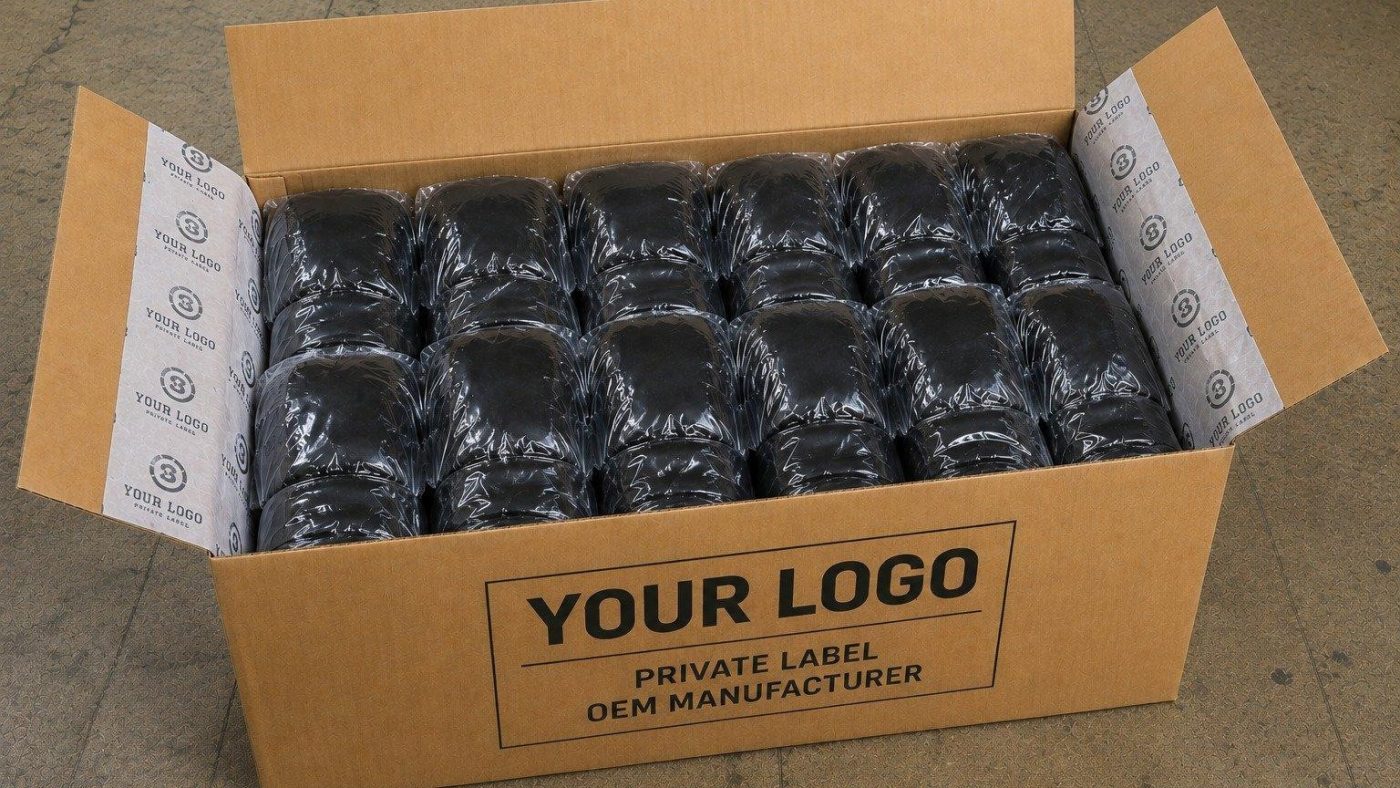
Private label doesn't have to mean:
"Put my logo on an existing product."
You can potentially improve:
packaging;
instructions;
accessories;
materials;
colors;
dimensions;
bundle;
warranty;
customer support.
That's where a generic product can become a differentiated product.
Step 6: Calculate your landed cost
Suppose your factory price is:
$8
Your actual cost could become:
$8 product
$1 packaging
$2 shipping
$1.50 duties and fees
$0.50 inspection
= $13 landed cost
If you sell for $15, your apparent "$7 margin" has disappeared.
That's why profitability must be calculated using the complete cost.
Step 7: Protect the brand
If you're building a long-term company, don't think only about the first shipment.
Think about:
trademarks;
packaging;
product documentation;
intellectual property;
supplier agreements;
quality specifications.
Chinese authorities have also been encouraging cross-border e-commerce businesses to register trademarks, pursue patents where appropriate and develop their own overseas brands.
Step 8: Don't depend on one supplier forever
Once your product works, you should understand your supply chain well enough to have alternatives.
A single supplier can create a serious business risk.
What happens if:
prices increase?
production stops?
quality declines?
the factory closes?
shipping delays occur?
Having alternative suppliers can give your business resilience.
Step 9: Build the brand outside China
This is where the entrepreneur creates most of the value.
The factory manufactures.
You build demand.
That means:
website;
content;
social media;
email;
customer service;
reviews;
community;
distribution.
China gives you manufacturing capacity.
Your brand gives you the relationship with the customer.
Step 10: Scale only after proof
A good sequence is:
Stage 1
Sample.
Stage 2
Small batch.
Stage 3
Real customer sales.
Stage 4
Customer feedback.
Stage 5
Product improvement.
Stage 6
Larger production.
Stage 7
Multiple suppliers.
Stage 8
International expansion.
This is much safer than starting with a massive inventory order.
The biggest misconception about Chinese manufacturing
People sometimes believe the advantage is simply:
"China is cheap."
That's not enough.
The real advantage can be:
manufacturing depth + supplier choice + production capacity + customization + supply-chain infrastructure.
The entrepreneur still has to solve the other half:
Who will buy?
A simple example
Imagine you discover that independent photographers struggle to transport and organize their equipment.
Instead of selling generic bags, you could build:
A professional photography organization brand
with:
customized bags;
cable organizers;
battery cases;
memory-card storage;
equipment labels;
travel accessories.
The Chinese factory doesn't create the brand.
You do.
The factory supplies the products.
Final thoughts
Building a product brand with Chinese manufacturers isn't about finding the cheapest factory.
It's about finding the right combination of:
customer problem + product + manufacturer + quality + logistics + brand + distribution.
China can solve the manufacturing side.
But the business succeeds only if you solve the customer side.