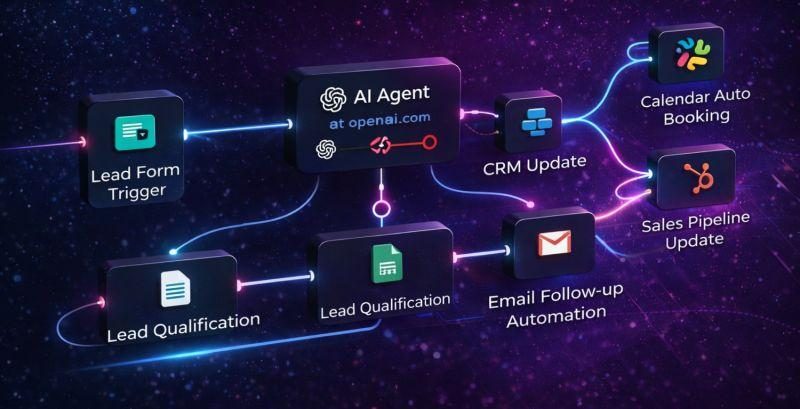
Running a small business often means doing many jobs at the same time.
You may be responsible for:
Sales
Customer service
Marketing
Finance
Inventory
Administration
Communication
The right digital tools can reduce the amount of manual work involved.
But there is a problem:
There are too many tools.
Instead of looking for the tool with the longest feature list, businesses should organize their technology around their actual needs.
1. A business email system
Email remains one of the foundations of business communication.
A professional email address such as:
creates a very different impression from a personal address.
A business should also organize email into:
Customer requests
Sales
Finance
Support
Internal communication
AI features can further help summarize conversations and draft responses.
2. Cloud storage
Important documents should not live on one employee's computer.
Cloud storage makes it easier to:
Share documents
Control access
Collaborate
Back up information
Work remotely
Create a logical structure from the beginning.
For example:
Company
→ Finance
→ HR
→ Sales
→ Marketing
→ Operations
→ Legal
→ Customers
3. Accounting and financial software
A business needs a clear view of:
Revenue
Expenses
Cash flow
Invoices
Outstanding payments
A simple financial system is usually better than a complicated one that employees don't maintain.
4. CRM software
A CRM helps organize customer information.
Instead of keeping customer information in notebooks, spreadsheets and personal phones, the company can maintain a central database.
A basic CRM should track:
Customer
Contact information
Last interaction
Opportunity
Status
Next action
5. Project-management software
As soon as a business has multiple employees, tasks can easily get lost.
A project-management tool should make it obvious:
What needs to be done?
Who is responsible?
When is it due?
What is the current status?
6. AI tools
AI can support almost every department.
For example:
Marketing
Content ideas, copywriting and research.
Sales
Lead summaries and follow-ups.
Customer service
FAQ responses.
Management
Data analysis and reports.
Operations
Documentation and process optimization.
The Federal Reserve's research on small businesses found AI use across areas including marketing, customer service, analytics, written communication and productivity.
7. Communication tools
Companies should avoid having critical information scattered across multiple private conversations.
A structured communication system makes it easier to distinguish:
urgent communication
from
information that needs to be documented.
8. Automation tools
Automation becomes useful when two or more systems need to exchange information.
For example:
Website → CRM → Email → Task management
Instead of an employee manually transferring information between systems, the workflow can happen automatically.
How many tools does a small business actually need?
Probably fewer than you think.
A basic digital stack could contain:
Email
Cloud storage
Accounting
CRM
Project management
AI assistant
Automation
The objective should be integration, not collecting dozens of applications.
The hidden cost of too many tools
Every new tool creates:
Training requirements
Passwords
Subscription costs
Data silos
Security considerations
Maintenance
That's why businesses should regularly remove tools that aren't being used.
A better way to choose software
Before buying a tool, ask:
What problem does this solve?
Then ask:
How often does this problem occur?
And finally:
What will improve if we solve it?
If you can't answer those questions, don't buy the software yet.
Final thoughts
Digital transformation doesn't mean buying more software.
It means designing a better way of working.
The best digital stack for a small business is therefore not necessarily the biggest one.
It is the one employees actually use.